


Running games have always had a special place in the hearts of gamers. From arcade machines to modern consoles, high -speed running adrenaline has always attracted players of all ages. But have you ever wondered what was the first racing game released?
Also read:
What was the first racing game?
Launched in 1976 by Atari, Night Driver is often considered one of the first racing games in history. In the game, players control a car that seems to drive at night, with the track being represented by a series of white posts that simulate the road illuminated by the headlights of the vehicle.
Night Driver’s simplicity was one of its most striking features. The player had to dodge obstacles and stay on the track for as long as possible, accumulating points as he advanced. The absence of vibrant colors and detailed graphics was offset by the immersive experience it provided, something never seen before in the arcades.

Night Driver also marked time for the use of Atari hardware. With controls that simulated a steering wheel and accelerator, the game brought a more realistic experience to the players of the time, setting the foundations for the future of running games.
The pole position revolution
Many do not consider Night Driver the first racing game, for not actually playing against other cars. But in 1982, Namco launched a game that would redefine the genre and become a milestone in the history of video games: pole position. Originally developed for arcades, pole position was one of the first games to feature colorful and detailed graphics, as well as the iconic third -person perspective, where the player’s car is seen from behind.
Pole position raised the level of racing games with various innovations. The game simulated a Formula 1 race experience, where players competed in a replica of the Fuji Speedway circuit. Before each race, there was a qualification phase that determined the player’s starting position, a concept that added an extra layer of realism and strategy to the game.
Pole position graphics were impressive for the time, with detailed scenarios and soft animations. In addition, the game introduced elements that would become standard in running games, such as the sound of the engines, the noise of the tire skids, and the increasing speed of speed as the player accelerate.
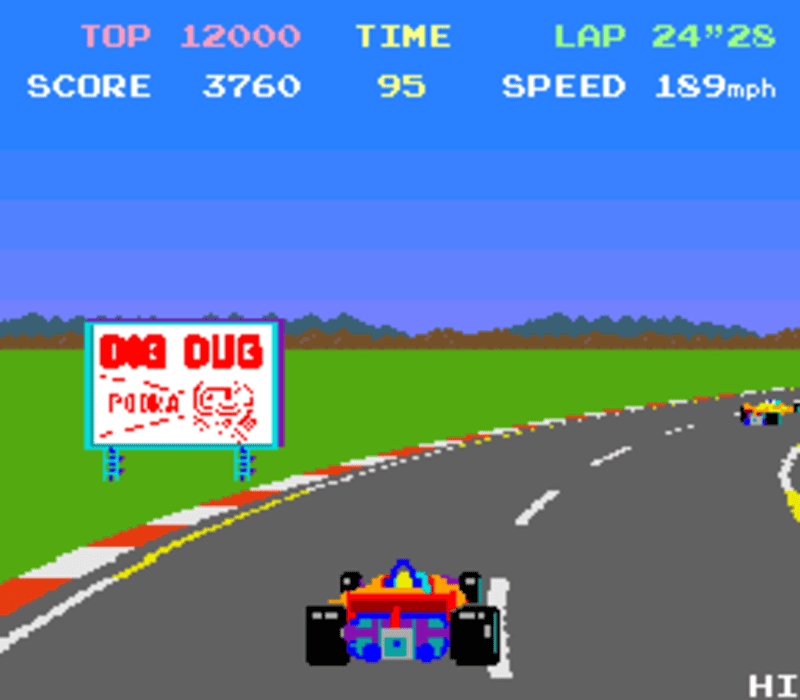
The gameplay was challenging, requiring quick reflexes and accurate skills to avoid obstacles and other cars on the track. Pole position was also one of the first games to include advertising plates throughout the circuit, an innovation that reflected the reality of Formula 1 races and would later become common in many sports games.
Night driver and pole position were not only milestones in the history of running games, but they also significantly influenced the video game industry as a whole. The transition from simple and monochrome graphics to colorful and detailed images, along with the introduction of realistic and immersive elements, paved the way for future developments in the genre.
These games also played a crucial role in the popularization of arcades during the 1970s and 1980s, attracting a generation of players fascinated by the possibilities offered by emerging technology.
When looking back in the history of running games, it is impossible to ignore the impact of Night Driver and Pole Position 1982. These games not only provided entertainment for millions of players, but also set the foundations for continuous development and innovation in gender. Today, when we play modern titles with realistic graphics and advanced physics, we are enjoying the legacy left by these pioneers.