


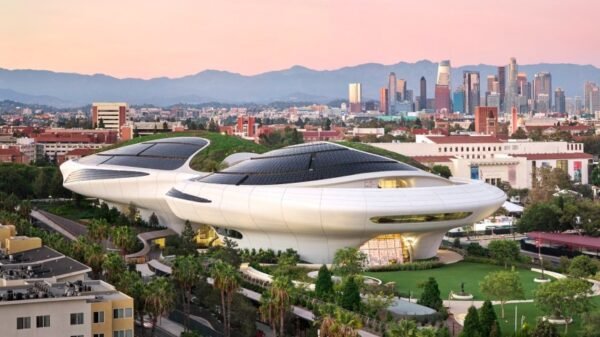
The highly anticipated Lucas Museum of Narrative Art officially opened its doors in Los Angeles this week, marking the culmination of over 15 years of planning and development. The museum’s striking design resembles a futuristic space station, promising a unique experience for visitors.
For those familiar with the notorious LA traffic, the thought of visiting another museum might seem daunting. However, the Lucas Museum stands out as a must-visit destination that justifies the journey.
As a local, I’ve explored numerous museums across Los Angeles, from childhood trips to the Natural History Museum to romantic evenings at the Getty Center. The city is rich with cultural offerings, yet the Lucas Museum elevates the standard significantly.
With filmmaker George Lucas and his wife, Mellody Hobson, at the helm, the museum embraces its connection to the Star Wars franchise. While the iconic series has a dedicated exhibit showcasing beloved characters like Darth Vader and Boba Fett, its representation accounts for only a fraction of the overall narrative art displayed.
The museum’s Star Wars exhibit features a variety of pieces, including Luke Skywalker’s iconic Landspeeder and original artwork by Ralph McQuarrie, but it comprises just 7% of the total collection on display.
George Lucas drew inspiration from Joseph Campbell’s The Hero With a Thousand Faces, which explores the hero’s journey—a theme that resonates throughout the museum’s exhibits. The focus here is on narrative in all its forms, with a clear connection between historical artwork and contemporary visual storytelling.
“I’ve spent more than 50 years collecting the work of artists who don’t always get their due,” Lucas stated, emphasizing the importance of including illustrators and muralists within the museum’s narrative. “They deserve to be in a museum,” he added, echoing a sentiment from the Indiana Jones franchise.
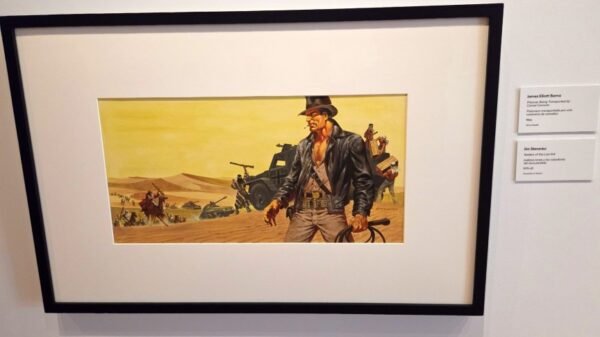
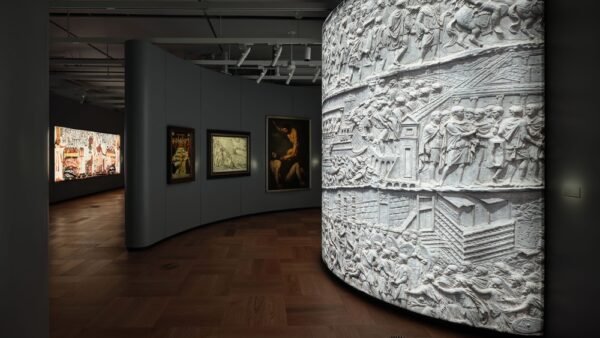
The museum houses over 30 galleries, including works by renowned artists such as Salvador Dalí and Frida Kahlo alongside contemporary creators like H.R. Giger and R. Crumb. The immersive layout of the museum, enhanced by innovative lighting and displays, creates a narrative experience that captivates visitors.
Inside, the Lucas Museum of Narrative Art features a 100,000-square-foot space that includes multiple galleries, two cinemas, a research library, a café, and the Skywalker Grill, all designed to enrich the visitor experience.
Designed by architect Ma Yansong, the museum’s distinctive biomorphic structure, valued at one billion dollars, contributes a unique silhouette to the skyline of Exposition Park. The surrounding landscape, crafted by Mia Lehrer, enhances the museum’s serene atmosphere, complementing nearby attractions like the California Science Center and the Los Angeles Coliseum, which will host the 2028 Olympics.
Originally, Lucas and Hobson considered other cities for the museum’s location, including San Francisco and Chicago. Ultimately, Los Angeles emerged as the ideal setting for a monument dedicated to visual storytelling across all genres.
Upon entering the Lucas Museum of Narrative Art, I anticipated a glimpse into the Star Wars universe. Instead, I departed feeling enriched by the comprehensive exploration of narrative art. After spending four hours there, I realized that I had only scratched the surface of its offerings. I look forward to braving the traffic once more for another visit to this remarkable cultural institution.