


The 80s were decisive for video games. This decade marked the advancement of domestic consoles, the popularization of arcades and the emergence of franchises that crossed generations.
Even after the 1983 crisis, the market recovered hard, driven by consoles that transformed electronic games into a global phenomenon.
So how about remembering some consoles that have somehow marked this decade? Next, we listed four of them for you to remember.
4 80s consoles for you to remember
Nintendinho (NES)
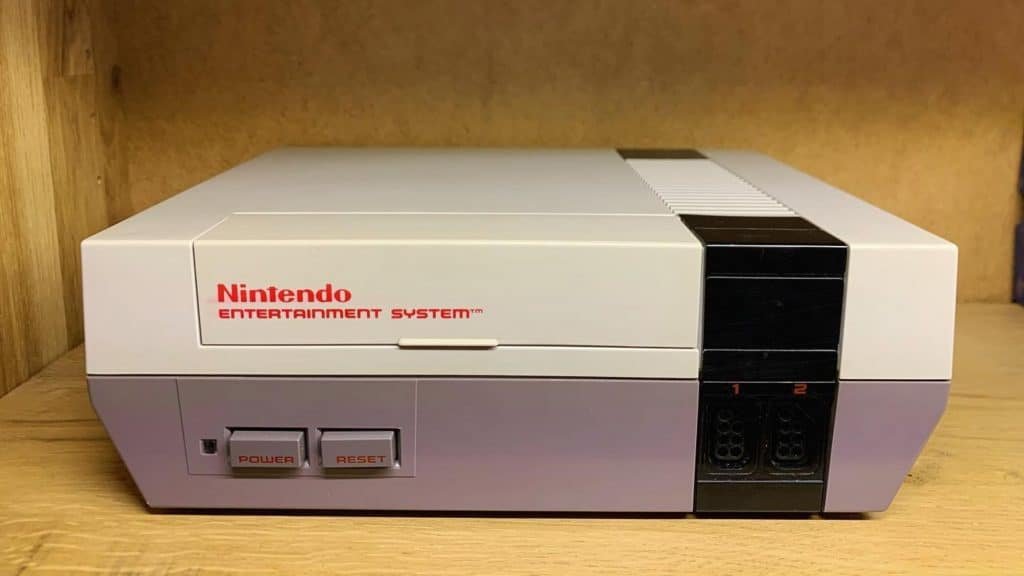
Most famous representative of the 3rd generation of video games, Nintendinho is an 8 -bit console, with games that run via cartridges. The console was originally launched in 1983 in Japan with the name Famicom (“Family Computer“). In this version, the two controls were fixed to the console by short cables, stored on the sides.
In 1985, Nintendo launched the console in the US with the name Nintendo Entertainment System (NES), redesigned with VCREEE look and removable controls. In Brazil, NES officially arrived in 1993, being nicknamed Nintendinho, but has been circulating since 1985 through imports and clones such as DynaVision 2.
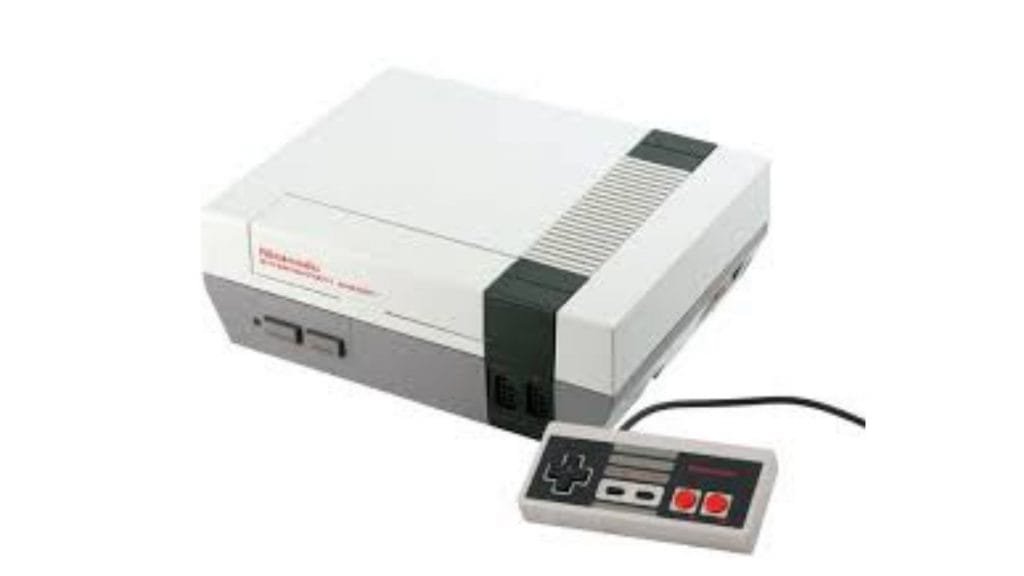
Nintendo’s most famous franchises, such as “Mario”, “Metroid”, “Donkey Kong” and “Zelda”, were born in this video game. Other famous series from other companies, such as “Mega Man”, “Castlevania”, “Against” and “Final Fantasy” also gave the guys in NES.
Some of the console’s highlight titles are: “Super Mario Bros. 3” (1990), “DuckTales (1989)”, “Metroid” (1986), “The Legend of Zelda” (1986), “Mega Man 2” (1988), “Castlevania” (1986), “1987),“ Ninja Gaiden ”(1988) and“ Punch-Out !! ” (1987).
Specifications:
- Processor: RICOH 2A03 (USA) / RICHOH 2A07 (Europe) – Based on MOS 6502, 8 bits, 1.79 MHz (NTSC) or 1.66 MHz (PAL)
- RAM: 2 KB
- Video: 256 × 240 pixels, 25 colors on the screen at the same time (from a 54 palette)
- Audio: 5 sound channels (2 square wave, 1 triangle, 1 noise and 1 simple digital sample)
MASTER SYSTEM
One of the most successful third-generation consoles, Master System is an 8-bit device that uses cartridges (as well as Sega Card in some versions) to play their games.
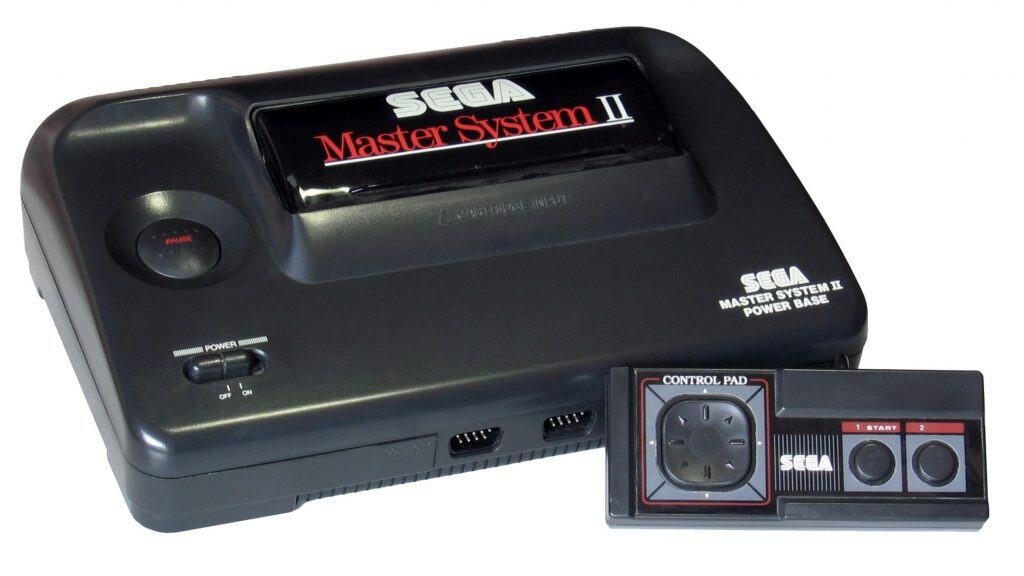
This console has a curious origin. In 1985, Sega launched in Japan Sega Mark III, the third version of the SG-1000 series. However, in 1986, the company launched Master System for international markets (North America, Europe, etc.), a remodeled and enhanced version of Mark III. In Japan, Master System was only officially released in 1987.
In Brazil, the Master System officially arrived in 1989, distributed by Tectoy, which turned the console into a great success, including launching updated versions and exclusive games.
Some of the Master System prominent games are: “Alex Kidd in Miracle World” (1986), “Phantasy Star” (1987), “Shinobi” (1987), “Wonder Boy III: The Dragon’s Trap” (1989) and “Ninja Gaiden” (1992).
Specifications:
- Processor: Zilog Z80, 8 Bits, 3.58 MHz (NTSC) / 3.57 MHz (PAL)
- RAM: 8 KB
- Video Memory (Vram): 16 KB
- Video: 256 × 192 pixels, up to 32 colors on the screen at the same time (from a palette of 64)
- Audio: 3 FM sound channels and 1 noise channel (PSG)
read more:
Atari 2600
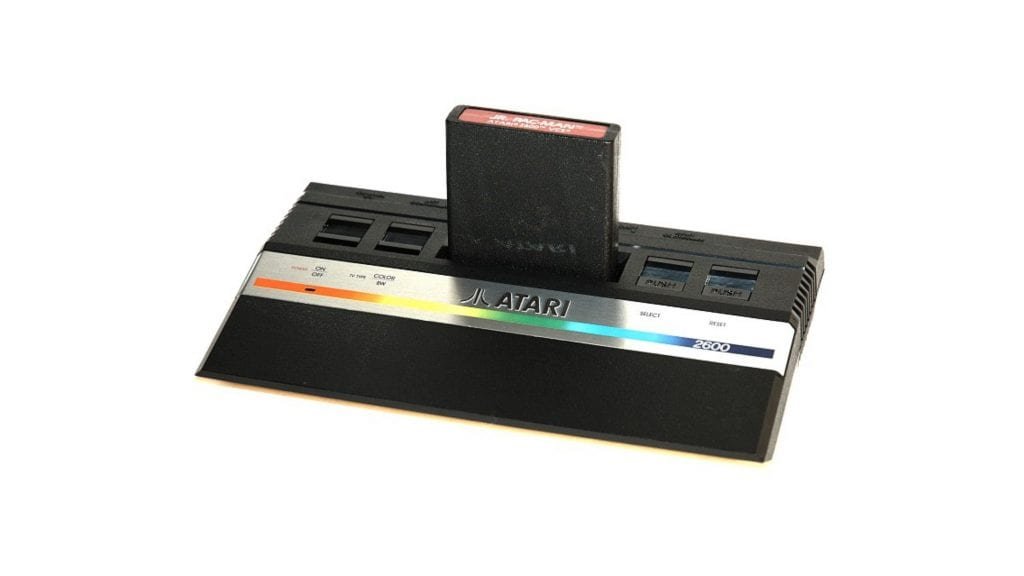
Although released in 1977, it was during the 1980s that the Atari 2600 actually exploded in popularity. Developed by Atari Inc., this second -generation video game console is an 8 -bit device that popularized the concept of interchangeable cartridges.
In Brazil, the Atari 2600 was launched in September 1983, manufactured by Polyvox, and was also very successful.
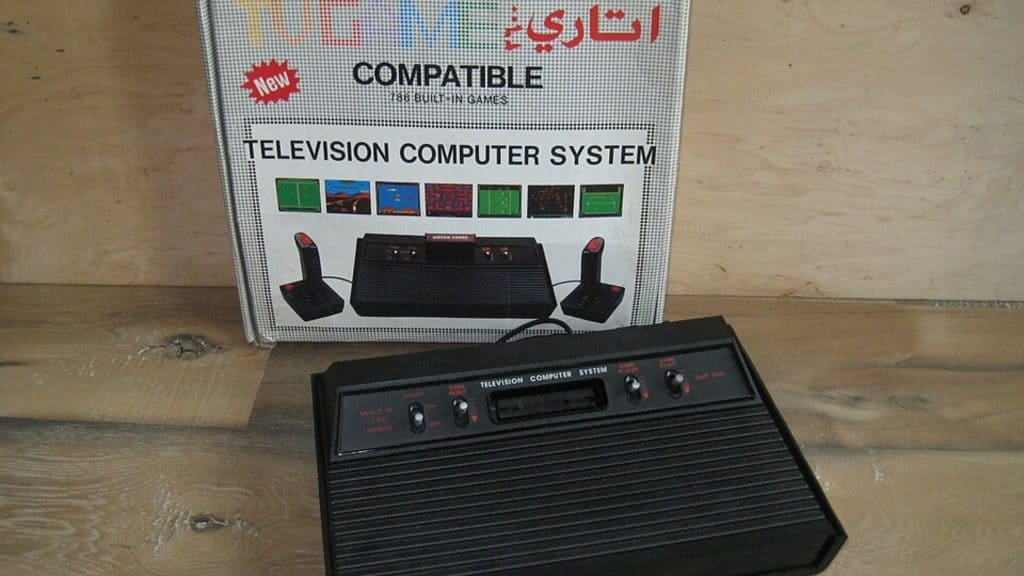
Atari 2600’s most famous games include Space Invaders (1980), “Pitfall!” (1982), “River Raid” (1982), “Adventure” (1979), “Missile Command” (1980), “Pac-Man” (1982), “Enduro” (1983), “Yar’s Revenge” (1982) and “Asteroids” (1981).
Specifications:
- Processor: MOS Technology 6507, 8 bits, 1.19 MHz
- RAM: 128 bytes
- Video: 160 × 240 pixels (sprites), 40 × 240 pixels (Playfield), NTSC palette with 128 colors, up to 2 sprites, 2 missiles and 1 ball per line.
- Audio: Mono with 2 basic channels, simple frequency and volume control.
Colecovision
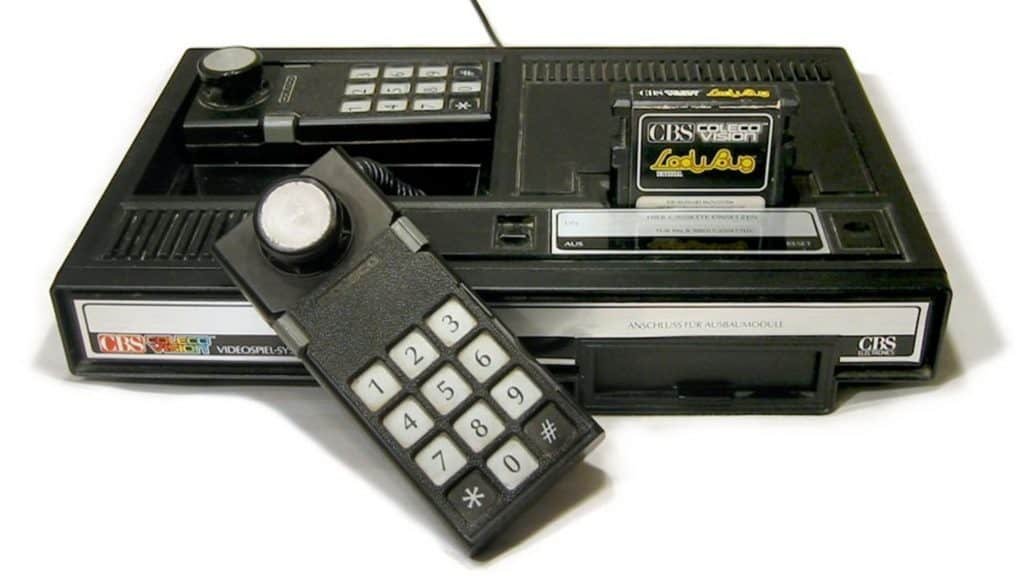
Launched in 1982, Colecovision was the second generation console of Coleco that brought well -advanced graphics and sounds to the time. This 8 -bit console was powerful for the period and, compared to its competitors, offered an experience closer to the arcade.
Colecovision’s controls were curious as they had the shape of an old phone with an analog -numbered keyboard at the top.
In addition, the console offered an accessory that allowed the Atari 2600 cartridges, further expanding its game library.
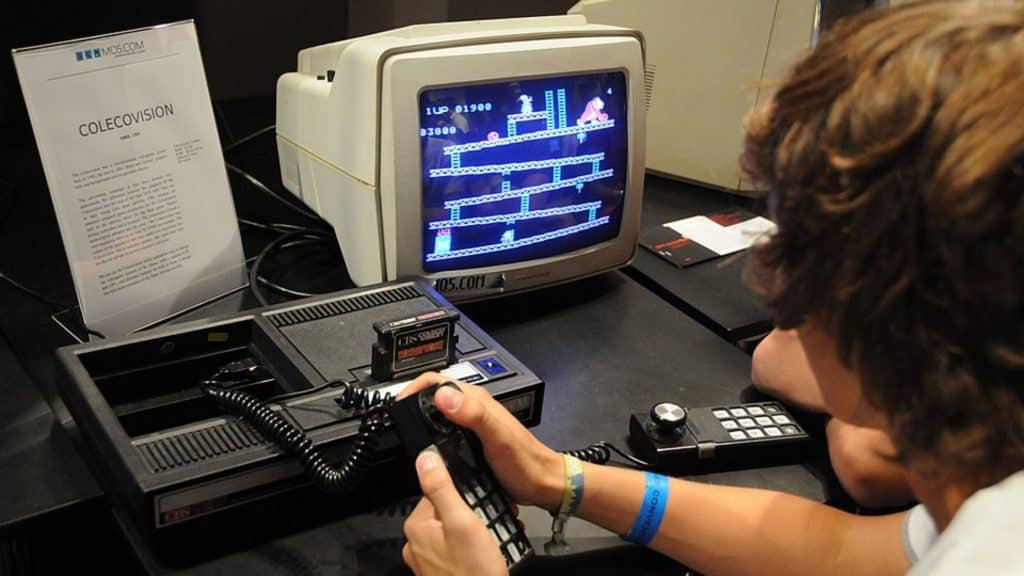
Colecovision’s prominent games include “Donkey Kong” (1982), “Zaxxon” (1982), “Lady Bug” (1982), “Venture” (1982) and “Cosmic Avenger” (1982).
Specifications:
- Processor: Zilog Z80a, 8 bits, 3.58 MHz
- RAM: 1 KB
- Video Memory (Vram): 16 KB
- Video: 256 × 192 pixels, up to 16 simultaneous colors, 32 sprites, 8 × 8 or 8 × 16 pixels
- Audio: Mono, 3 tone channels and 1 noise channel